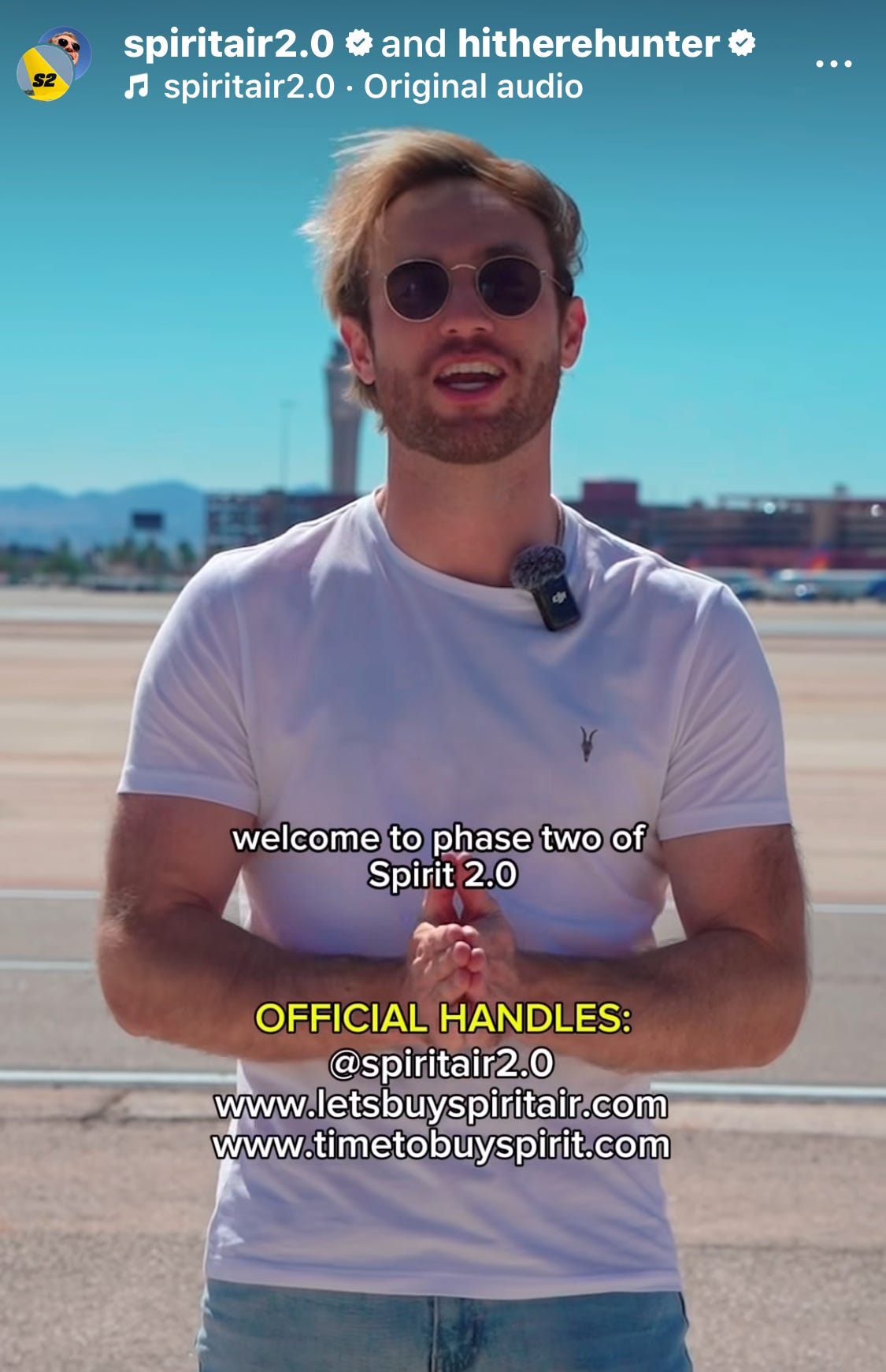
It was a beautiful, feel-good campaign. When Hunter launched his grassroots movement —dubbed “Spirit 2.0”—to crowdsource the purchase and resurrection of Spirit Airlines, it tapped into a powerful truth: the working class wants to believe that 99% is greater than 1%. It proved that regular people, when pushed to the brink, will actively look for ways to pool their power and fight back.
But there is a massive difference between organizing a movement on the internet and wading into the deep ocean of high-stakes corporate aviation. Hunter, bless his heart, was swimming with sharks without a cage.
When you look past the optimism and confront the sheer mountain of federal regulations required to operate an FAA Part 121 commercial air carrier, reality hits fast. Announcing a plan to buy back a defaulted airline without institutional airline management experience—and more importantly, without massive, liquid institutional capital—is a beautiful, logistical nightmare.
Capital is the operative word here. It is the defining boundary line between the powers that seem and the powers that are.

The Powers That ARE vs. The Powers That BE
The entities truly calling the shots are private equity behemoths and predatory hedge funds—the likes of Citadel, PIMCO, and AllianceBernstein. They were never going to let a decentralized band of misfits buy up commercial aviation assets. To understand why, you have to look back at the engineered corporate warfare of the 2022 Merger War.
During that cycle, Frontier Airlines initially offered a stock-heavy “merger of equals” valued at $2.9 billion. It was a structured, operationally viable combination designed to survive. Then JetBlue crashed the gate with an unsolicited, hostile, 100% pure all-cash offer of $33.50 per share, totaling $3.8 billion.
Institutional hedge funds didn’t care that federal regulators were highly likely to block the JetBlue merger on antitrust grounds. They forced the JetBlue deal anyway because $3.8 billion in short-term cash is bigger than $2.9 billion in long-term operational viability. When a federal judge predictably blocked the deal in early 2024, Spirit was left structurally broken, hollowed out, and drowning in billions of dollars of debt.
For Wall Street, Spirit was an asset that simply “ran its course.” These firms profit on both ends of the lifecycle. They frequently make more money from a company failing than from bailing it out.
How the Predatory Loophole Works:
The Matchmakers Profit: Investment banks and financial advisors collect millions in transaction and advisory fees while a deal is being negotiated.
The Crash Profits: When the deal inevitably falls through, institutional players write off the losses, passing the ultimate systemic risk down to the taxpayers.
The Liquidation Profit: Once the airline defaults, those same institutional faces step back into the courtroom to buy up the carcass—the planes, the routes, and the real estate—at steep, distressed discounts.
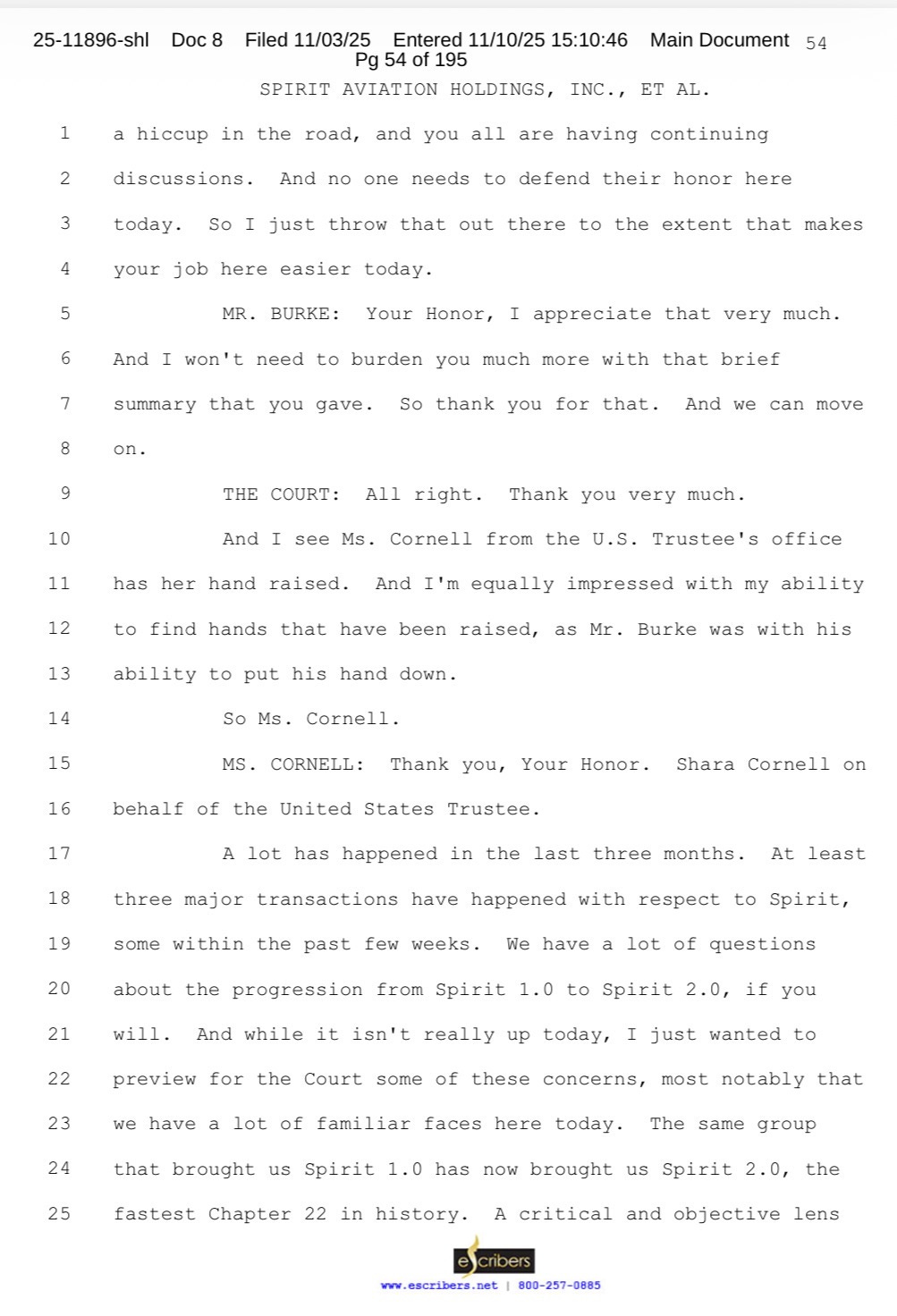
This isn’t a theory; it’s a recorded pattern. During the initial chapter 11 bankruptcy hearings in late 2025, Ms. Shara Cornell from the Office of the United States Trustee noted the uncanny repetition of characters controlling the estate:
“The same group that brought us Spirit 1.0 has now brought us Spirit 2.0... We have a lot of questions about the progression.”
The Big “Circular Economy”
While billions of dollars float around in this self-sustaining financial “circle” (and we’re only using this term other terms may get us in legal troubles), the actual human beings who built the airline are left completely exposed.
When Spirit abruptly ceased all flight operations on May 2, 2026, following its failure to reorganize, approximately 17,000 employees were suddenly terminated via an immediate email from executive management. They weren’t just left without jobs; they were stripped of healthcare benefits, denied their contractually mandated pay in lieu of furlough notice, and blocked from accessing their final paychecks, accrued vacation time, and unused sick leave.
Right now, a $70 million general wage reserve sits inside the bankrupt estate—capital specifically recognized and set aside to cover employee obligations. Yet, the debtors and their secured lenders are actively refusing to release those reserves to the workers, using them instead as leverage while executives beg the bankruptcy judge for “exculpation” (personal legal immunity).
The math of corporate restructuring is brutally clear:
The 17,000 workers represent 99% of the company’s human capital.
The wages and benefits they are begging for represent a mere 1% to 2% fraction of the broader $3.1 billion Spirit story.
The 99% is absolutely greater than the 1% numerically, but numbers don’t matter if the 99% only shows up as a one-off reaction. To shift the balance of power, the working class has to consistently, aggressively, and strategically show up to disrupt the legal mechanisms protecting corporate wealth.
The Systemic Trap
All of these economic realities are deeply connected to the systems everyday Americans rely on. The exact same institutional fund managers who profit from the engineered failure of regional air carriers are the ones quietly injecting high-stakes, volatile tech assets like SpaceX stock directly into consumer 401(k) plans via mutual funds—often without the direct knowledge or explicit consent of the account holders.
Your retirement stability is routinely weaponized to fund their high-stakes gambling.
For the 99% to actually win a structural victory, it would require systematically dismantling the entire framework upon which corporate America has been built. The uncomfortable truth of modern economics is that most Americans aren’t ready to do that yet. Dismantling a system this interconnected means nine out of ten people would become intensely uncomfortable, very quickly.
Hunter’s movement was an admirable display of solidarity, and the momentum he built deserves applause. But when you spend your time digging through federal court dockets, decoding SEC filings, and analyzing corporate waste, you stop being shocked by the cruelty of the process.
Wall Street’s version of “Spirit 2.0” was never an attempt to save an airline—it was an orderly execution of an asset. And until the working class learns to fight with the same precise, legal, and systemic leverage that the sharks use, the circular economy of bankruptcy will keep spinning exactly as intended.