Welcome to The Unpaid Employee, your weekly update newsletter dedicated to tracking the ongoing corporate restructuring and asset liquidation of the Spirit Airlines bankruptcy case. This newsletter will drop once a week on either Thursday or Friday, depending directly on the active bankruptcy court hearing schedule.
Our mission remains entirely focused on digging through dockets, unsealing hidden financial ledgers, and delivering cold, verified facts directly to the 17,000 frontline employees fighting for structural transparency!
⚠️ CRITICAL NOTICE: Schwab 401(k) Access & Unemployment Reporting
Disclaimer: We are not legal or financial advisors. The analysis below is for educational and asset-tracking purposes. PLEASE do your own research and verify the specific labor and unemployment regulations for your individual state!
As contract groups transition to “non-active” status on the Charles Schwab platform—signaling that Spirit Airlines no longer directs your account and you have assumed full individual control—crucial questions have arisen regarding how moving these retirement assets impacts weekly state unemployment benefits.
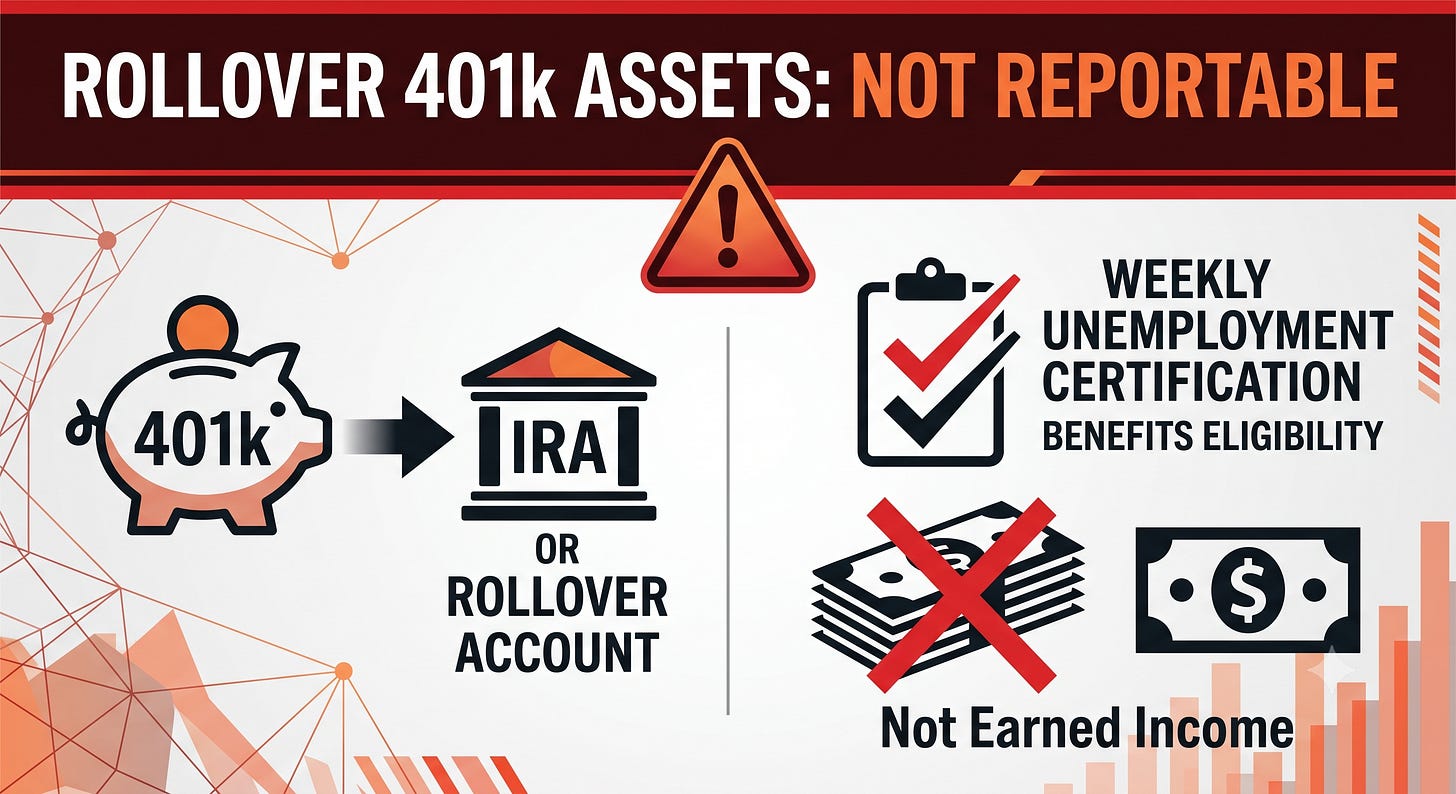
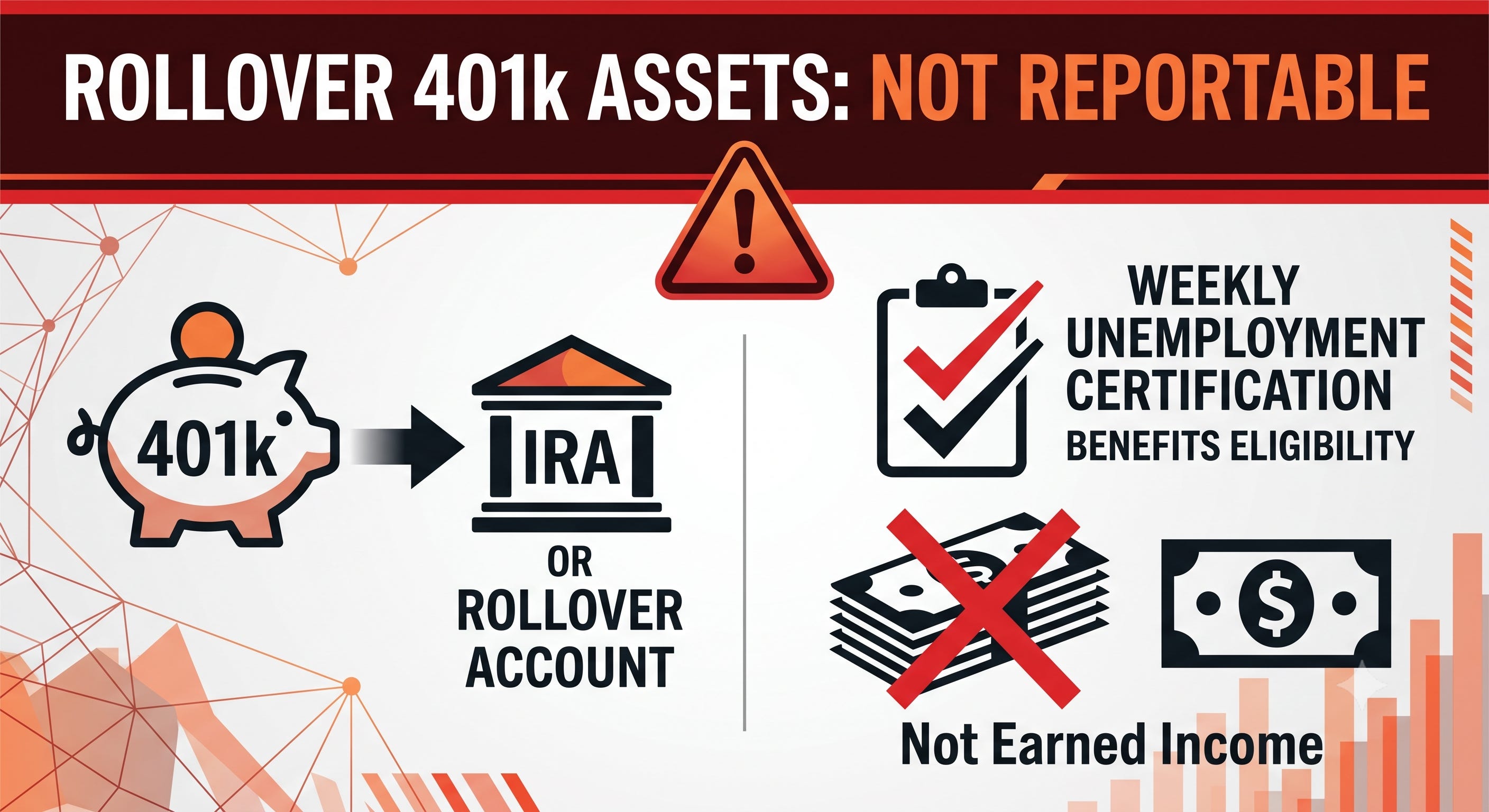
Not Earned Wages: Under the statutory framework of nearly every state labor department, funds held within or rolled over from a qualified employee-sponsored 401(k) plan do NOT constitute “earned wages.”
Unemployment Compliance: Because moving your balance to an IRA or another qualified fund represents a transfer of deferred compensation rather than active service income, it typically does not need to be reported as weekly earnings on your unemployment certifications.
State Specifics Vary: While the sheer volume of concurrent terminations has elongated the structural changeover timeline at Schwab, direct cash liquidations may trigger state-specific reporting mandates. Verify your local state guidelines immediately to safeguard your benefit eligibility.
1. The WARN Act Complaint: Unmasking Executive Payouts
As documented across the primary dockets indexed in Spirit Airlines Bankruptcy_4, the full text of the Dionne et al.WARN Act class action complaint targets the core leadership team for executing a sudden shutdown without the legally mandated 60 days’ notice.
Explicitly Naming the Targets: The lawsuit strips away the corporate anonymity of the wind-down plan, identifying CEO David Davis, CFO Fred Cromer, and COO John Bendoraitis as the inner management circle slated to receive millions in “Wind-Down KEIP” bonuses.
The 2025 Double-Dip: The complaint argues the fundamental inequity of these liquidation rewards by exposing the massive retention bonuses this identical trio extracted earlier in 2025: $2.9 million to Davis, $1.2 million to Cromer, and $1.1 million to Bendoraitis.
2. Docket 1233: The June 12 Executive Bonus Ruling
Docket 1233 contains the official transcript of the bench ruling delivered by federal Judge Sean H. Lane on June 12, 2026, regarding the bankrupt estate’s controversial executive bonus structures.
Overruling the U.S. Trustee: The U.S. Trustee filed a fierce objection, stating it was fundamentally unfair to reward corporate officers with generous wind-down packages while rank-and-file workers lost their jobs and general unsecured creditors faced a total wipeout. Judge Lane overruled the objection, noting that the Trustee failed to present expert cross-examination or evidence to legally dismantle the company’s financial metrics.
The Payout Caps and Metrics: The approved Key Employee Incentive Plan (KEIP) allows the remaining three executives to extract up to $5.4 million in total incentive payments. These rewards are directly tied to gross asset sale values and a 3.5% cut of the cash recovered from monetizing the airline’s highly valuable LaGuardia Airport (LGA) slots.
The Union Cost-Savings Compromise: Due to aggressive legal pushback from the unions (IAM, TWU, and ALPA), the court forced a structural modification. Language was added to the final order ensuring that executive bonus targets cannot be met by withholding or minimizing employee funds, blocking management from profiting off unpaid worker wages.
3. The Legal Strategy: Weaponizing Purdue Pharma & Targeting D&O Insurance
The structural frameworks clarify that while corporate shields block standard recovery routes, specific federal precedents provide a clear path to target executive assets directly.
The Exculpation Fight & The Purdue Pharma Precedent
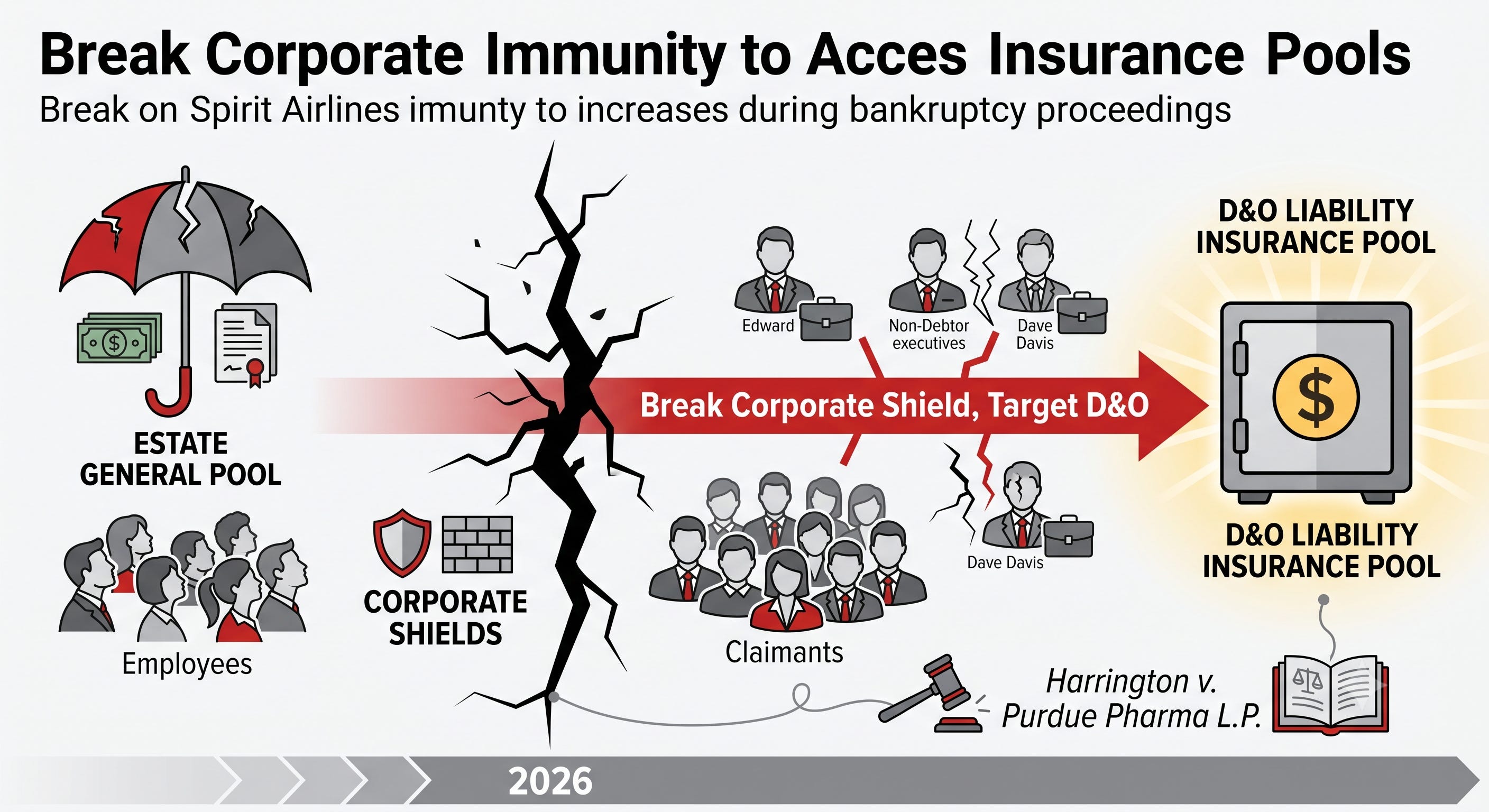
Spirit’s senior executives are actively seeking “exculpation” (complete civil immunity) from the bankruptcy court for their actions leading up to the liquidation. However, the landmark Supreme Court ruling in Harrington v. Purdue Pharma L.P. (2024) dictates that a bankruptcy judge cannot grant nonconsensual third-party releases to non-debtor individuals. Because Edward M. Christie III, David Davis, and the rest of the executive team are non-debtors, the bankruptcy court cannot legally strip employees of their right to file direct personal lawsuits against them without the explicit consent of the claimants.
Shattering the Shield via D&O Insurance Pools
To secure direct recovery for unpaid wages, accrued vacation time, and sick leave, our ongoing legal strategy must bypass the empty corporate shell of Spirit Airlines LLC and target the executives personally.
The Statutory Blueprint: While generic breaches of fiduciary duty are derivative claims belonging to the bankruptcy estate, individual state labor laws provide a direct route to individual accountability. Statutes such as New York Labor Law § 198-c and California Labor Code § 558.1 impose direct personal liability on corporate officers who knowingly permit labor and wage violations. By establishing that management acted in bad faith—such as pouring capital into a luxury $250 million Dania Pointe corporate headquarterswhile actively defaulting on worker obligations—we can shatter their corporate liability protections. This shatters their shield and directly triggers their Directors and Officers (D&O) Liability Insurance pool to fund outstanding employee back-pay obligations.
4. The Restructuring Docket: Key July & August Sale Deadlines
The final physical remnants of Spirit Airlines will be sold off piece by piece before Judge Sean H. Lane on the Southern District of New York docket:
July 8, 2026, at 11:00 a.m. (Aircraft Sales & Leases): The court will rule on expanding FTI Consulting’s scope to manage the marketing and sales process for 27 Airbus A320 CEO family aircraft financed through EETCs. The court will also rule on the formal assumption and assignment of specific “Use and Lease Agreements.”
July 22, 2026, at 10:00 a.m. (The Primary Sale Hearing): The definitive auction event where the court evaluates proposed Sale Transactions to liquidate the airline’s core remaining operational assets, executory contracts, and unexpired lease portfolios.
August 12, 2026, at 11:00 a.m. (Headquarters & Fees): The court will review the final winning bid for the Campus Properties (the corporate headquarters building). Any objections to this real estate liquidation must be filed by August 7, 2026. The court will also rule on the Second Interim Fee Application for Ernst & Young LLP for audit and tax services spanning December 1, 2025, through February 28, 2026.
Please remember to file your Wage Claim if you haven’t done so already!
And, remember 99 is Greater Than One!