
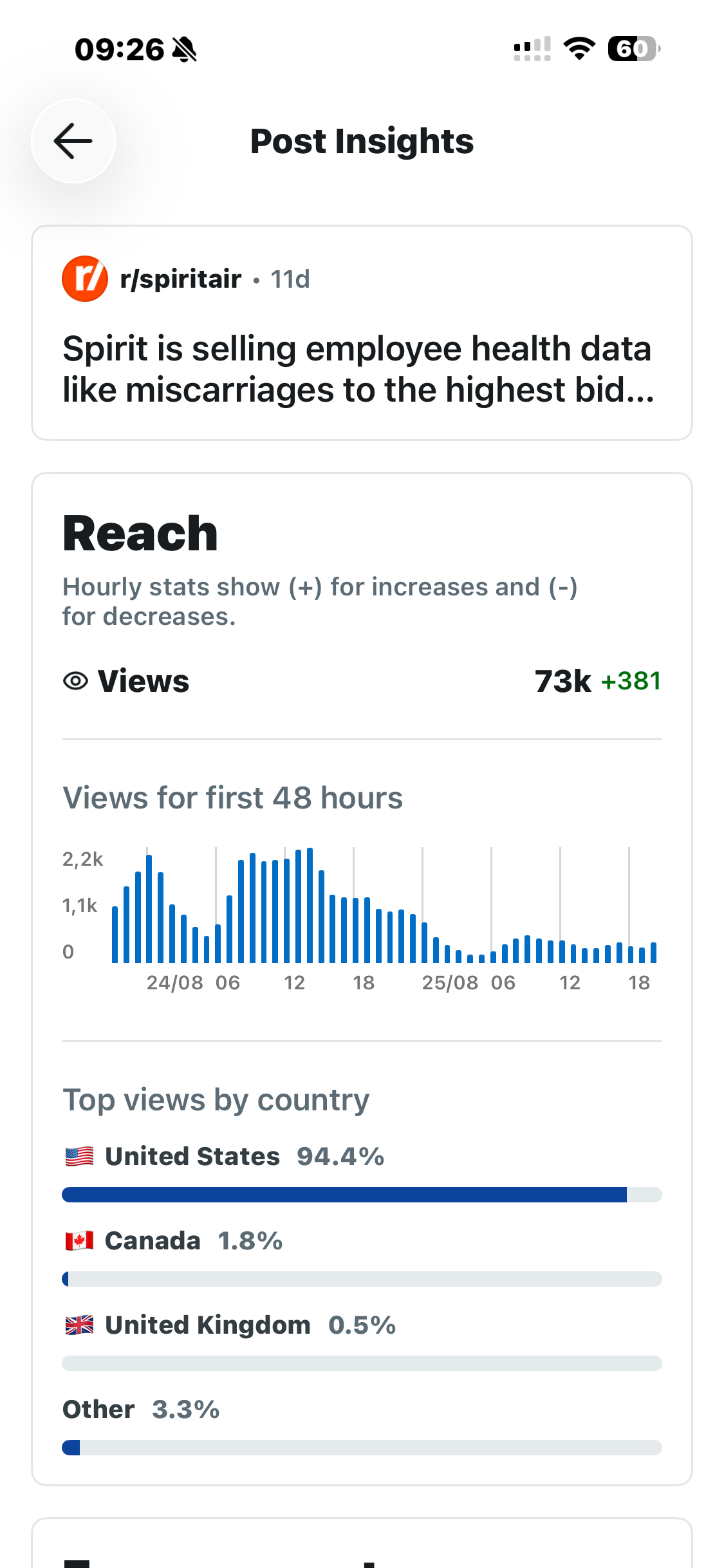
The video crossed 100,000 views across platforms this week! Let's keep up the sharing, the fighting and the GOOD trouble!! But, now back to the docket, because this week gave us two genuinely different fights: one over who gets your data and on what terms, and one over who gets to buy back the flight simulators sold to Spirit.
A Second Bidder Shows Up — With a Contract, Not Just a Check
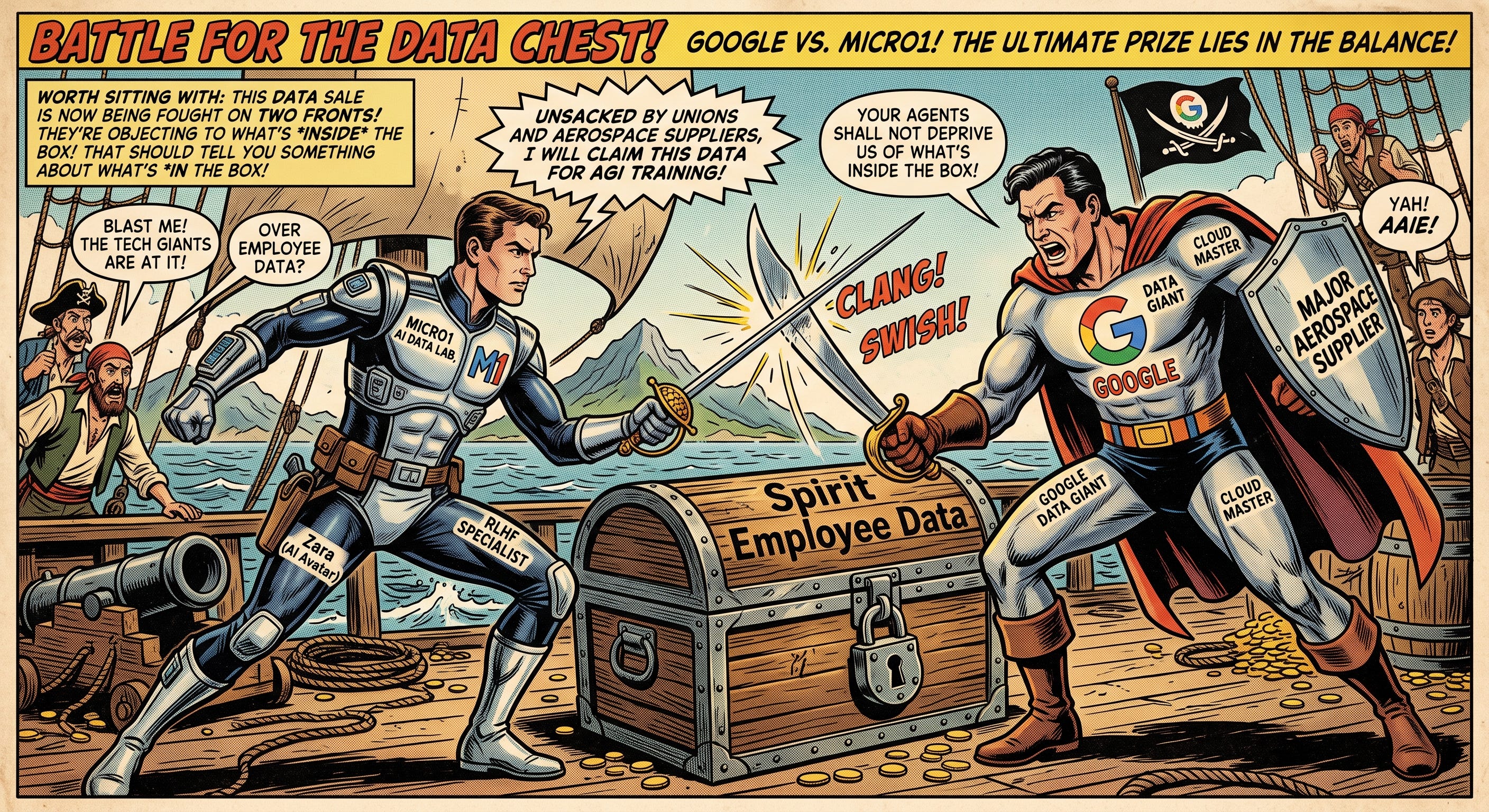
On September 3, micro1 Inc., an AI-training data company, filed formal notice that it intends to submit a competing bid for the Deidentified Data — the same 100-million-email, 500-million-Teams-message archive Google won at auction for $10 million on August 14. micro1 is offering $12,500,000 in cash, funded entirely from cash on hand, with no financing condition and no board or investment-committee consent condition (Dkt. No. 1556 ¶4). That’s a 25% premium over Google’s bid and $5 million more than the backup bidder, Mercor, offered.
But the number isn’t the interesting part. The interesting part is what micro1 is offering to not do with the data — and it’s written directly into the filing as proposed language for Judge Lane’s own order, not just a promise in a press release.
Questions We Had, Answered From the Filing
Q: If you’re planning to strip out so much of the data, why pay more for it — and why would you want it at all?
micro1 doesn’t frame this as a volume play. Buried in the “why should the court take this seriously” section of the filing is the real answer, and it’s about litigation risk, not data richness:
“Recovery is price multiplied by the probability of closing, less the cost of delay. A bid that arrives with stipulations in hand and agreed decretal language for the Sale Order is worth more to creditors than a bid that arrives with those objections live, contested at a hearing, and exposed to appeal.” (Dkt. No. 1556 ¶11)
In plain terms: micro1’s pitch to the estate isn’t “our data science is better,” it’s “buy from us and skip the fight.” They’re betting that a clean sale beats a contested one, dollar for dollar. And notably, they’re not asking for a discount for the redactions — the filing states micro1 “will bear all costs of deidentification... with no reduction in the Purchase Price” (Dkt. No. 1556 ¶6).
Q: “Binding covenants” is a nice phrase. How does this actually get enforced?
Not as a side letter, and not as a handshake. The filing proposes these commitments be “incorporated as findings and decretal provisions in the Sale Order enforceable by the Bankruptcy Court” (Dkt. No. 1556 ¶7) — meaning if the judge adopts this language, it’s not micro1’s promise anymore, it’s a federal court order, and violating it means going back in front of Judge Lane. For Springshot’s specific objection (the vendor claiming ownership over some of the operational software), micro1 goes a step further and commits to “a direct stipulation with Springshot making this covenant enforceable through injunctive relief, with notice and cure” (Dkt. No. 1556 ¶9) — a separate, standalone legal hook Springshot could pull if it’s ever violated.
Q: What does the “Data Review Ombudsman” actually do — and is this the same ombudsman from before?
No. This is a different role from the one you already know about. Lucy L. Thomson was appointed Consumer Privacy Ombudsman back in July (Dkt. No. 1446), and her job was built around the Google deal’s CCPA-consumer-privacy framework. micro1’s filing proposes a second, separate ombudsman specific to its own bid: someone “selected by the Debtors, reasonably acceptable to the objecting parties, and approved by the Court,” who “shall receive a sample of one percent of the deidentified Assets before any further onward transfer,” with micro1 covering all costs (Dkt. No. 1556 ¶8(e)). Two different people, two different jobs, two different sale proposals. Worth keeping straight if this moves forward.
The Part of the Court Filing That Directly Effects Employees
Way down in the list of commitments, easy to skim past: micro1 says it “will provide former Spirit employees with free access to its AI training and re-skilling curriculum and preferential consideration for paid annotation and data-transformation work on the micro1 platform” (Dkt. No. 1556 ¶8(h)).
Read that twice.
A company bidding on data generated by your labor is also offering you first crack at paid work using that same skill-set. We don’t know yet what that curriculum looks like, what “preferential consideration” actually means in practice, or what it pays. But if this bid goes anywhere, that’s a benefit directly available to people reading this newsletter, and we’re going to keep asking micro1 and the Debtors to define those terms in writing before anyone celebrates it.

Google’s Deal vs. micro1’s Deal — What the Filing Says the Difference Actually Is
A caveat before this part: everything below about Google’s agreement comes from micro1’s own filing characterizing it — we don’t have Google’s Sale Agreement in front of us directly, only what micro1 and AFA’s objection say about it. Read this as micro1’s account of the contrast, not our independent verification of Google’s terms.
With that said, here’s the gap as micro1 describes it. AFA’s limited objection identified what the filing calls “a structural gap in the Sale Agreement: the deidentification framework is calibrated to consumer identifiability under the CCPA standard and does not address the confidentiality of employee records” (Dkt. No. 1556 ¶3). Translation: the privacy protections built into the Google deal were designed around protecting customers under California consumer privacy law — not around protecting employees, whose data is caught in the same dataset almost as an afterthought.
micro1’s filing also points to a specific mechanical problem with the Google deal: the existing Sale Agreement “covenants at Section 3(e) that no portion of the Assets has been deleted, modified, or removed” (Dkt. No. 1556 ¶8(g)) — meaning, as micro1 tells it, Google’s deal doesn’t actually have a clean contractual path to removing the sensitive categories (disciplinary records, grievance files, medical/leave records, EEO material) that the unions are objecting to, even if everyone wanted to. micro1’s proposal includes an advance waiver specifically designed to unlock that — letting the Debtors redact those categories without exposing themselves to a claim from micro1 later that the deal changed after signing.
Whether that’s a real structural flaw in Google’s deal or a competitor’s advantageous framing of it is exactly the kind of thing worth watching play out at the September 9 hearing.
The Simulator Fight: A Manufacturer Accused of Trying to Buy Its Own Equipment Back Cheap
On September 2, the Debtors filed a motion asking the court for Rule 2004 discovery — depositions and document production — into SIM International B.V., the manufacturer of three flight simulators Spirit is trying to sell as part of the wind-down.
The core allegation, in the Debtors’ own words: SIM “has undertaken efforts to manipulate the outcome of the auction of the Simulators, seemingly designed to ensure that SIM will be able to buy back the Simulators it manufactured for bargain-basement prices that are a tiny fraction of what Spirit paid only a couple of years ago” (Dkt. No. 1550 ¶4). Worth being precise here: this is an allegation in a discovery motion, not a finding by the court, and no hearing has happened yet.
The money. Spirit paid SIM more than $8 million for each of the three simulators, purchased in 2021, 2022, and 2023 respectively (Dkt. No. 1550 ¶3).
The alleged pressure campaign. According to the motion, SIM told the Debtors it wouldn’t consent to transferring the software needed to run the simulators to any buyer — despite the Debtors’ position that the original purchase agreements already authorize exactly that kind of transfer to a “successor in title.” The Debtors say SIM then contacted a prospective bidder directly; that bidder dropped out of the auction entirely afterward. A second bidder stayed in and offered nearly twice what SIM bid — but only on the express condition that SIM provide written consent to transfer the software (Dkt. No. 1550 ¶¶17, 19).
SIM’s own bid. When SIM finally submitted its own offer, it came in “millions of dollars below the other prospective offers — including the proposal SIM itself submitted only weeks earlier — and less than half the amount Spirit originally paid for just one” simulator (Dkt. No. 1550 ¶9).
What the Debtors are asking for. Not a ruling on the merits yet — just the right to subpoena SIM’s communications with other bidders and depose a SIM corporate representative, to find out whether the pattern above is coincidence or a deliberate effort to chill competing bids (Dkt. No. 1550 ¶10). If discovery bears that out, the Debtors say they’ll consider “appropriate sanctions or causes of action” afterward (Dkt. No. 1550 ¶26). No hearing date has been set on this motion as of this filing.

Upcoming Court Dates
September 9, 2026, 11:00 a.m. — Sale Hearing on the Deidentified Data: Google’s Successful Bid vs. micro1’s competing bid, before Judge Sean H. Lane.
September 9, 2026 — Also the scheduled date of the 27-aircraft EETC auction (a separate matter, previously covered).
September 9, 2026, 4:00 p.m. — Objection deadline for the Debtors’ Motion to Enforce the Final Amended DIP Order re: Administrative Claim Carve Out (B) [Dkt. No. 1541].
September 15, 2026, 11:00 a.m. — Deadline to register a Zoom appearance for the September 16 Carve-Out (B) hearing.
September 16, 2026, 11:00 a.m. — Hearing on the Debtors’ Motion to Enforce the DIP Order re: Administrative Claim Carve Out (B), before Judge Sean H. Lane. This is the motion touching the segregated employee reserve — we don’t have the underlying motion [Dkt. No. 1541] yet, so we can’t tell you what’s actually being enforced. Working on getting it before the 16th.
SIM International Rule 2004 discovery — motion filed, no hearing date set yet. If granted, SIM would have 20 calendar days from service of the subpoena to substantially complete document production.
September 9 is doing triple duty this year. Watch it.
— The Unpaid Employee | spiritdidnotpayme.com