Two Forms, Two Different Claims — Why it Happened.
So, if you’ve been with us at SDNPM since Day 0: you have probably filled out at LEAST one (but, hopefully two) official court form(s). The Official Form 410 — the standard federal “Proof of Claim” form — checking the box for wages, salaries, and commissions. And, The Pre-Wind Down Administrative Expense Claim. Let’s break them both down to see which form did what.
Form 410: covers pre-petition wages — money already owed to you as of August 29, 2025, the day Spirit filed for bankruptcy. Under 11 U.S.C. § 507(a)(4), unpaid wages earned in the 180 days before the petition date (roughly early March 2025 through August 29, 2025) get elevated to priority unsecured status, capped at $17,150 per employee (the current statutory cap, adjusted April 2025). That’s a real and meaningful boost — it jumps you ahead of ordinary vendors and trade creditors. It is not the same as being a secured creditor, though — secured status requires an actual lien on specific property, which employees don’t have. Priority unsecured still sits behind secured lenders’ claims against their specific collateral (more on that below).
The Pre-Wind Down Administrative Expense Claim: covers a completely different period — wages, PTO, and WARN Act liabilities that accrued after the petition date, while Spirit kept operating in bankruptcy, all the way through the May 2, 2026 shutdown. Debts incurred during a Chapter 11 case get “administrative expense” priority under 11 U.S.C. § 503(b) — which actually ranks above the wage priority tier, not below it, because bankruptcy law strongly favors paying the costs of running the case. This is the process most of you went through this summer via your union’s Omnibus Union Claim (Docket 1215) or an individual filing, ahead of the July 27 bar date.
So if you filed Form 410 early and then felt blindsided by a second form months later: you weren’t filing the same thing twice. Form 410 could only ever reach the slice of wages owed before the case started. Everything owed during the wind-down needed a different vehicle, because it’s a legally different kind of claim. Both are valid, both matter, and if you filed Form 410 but never got to the Pre-Wind Down Claim (or vice versa), it’s worth checking your Epiq claim history to see what’s actually on file under your name.
The Dania Beach Campus: Sold, Pending Court Approval
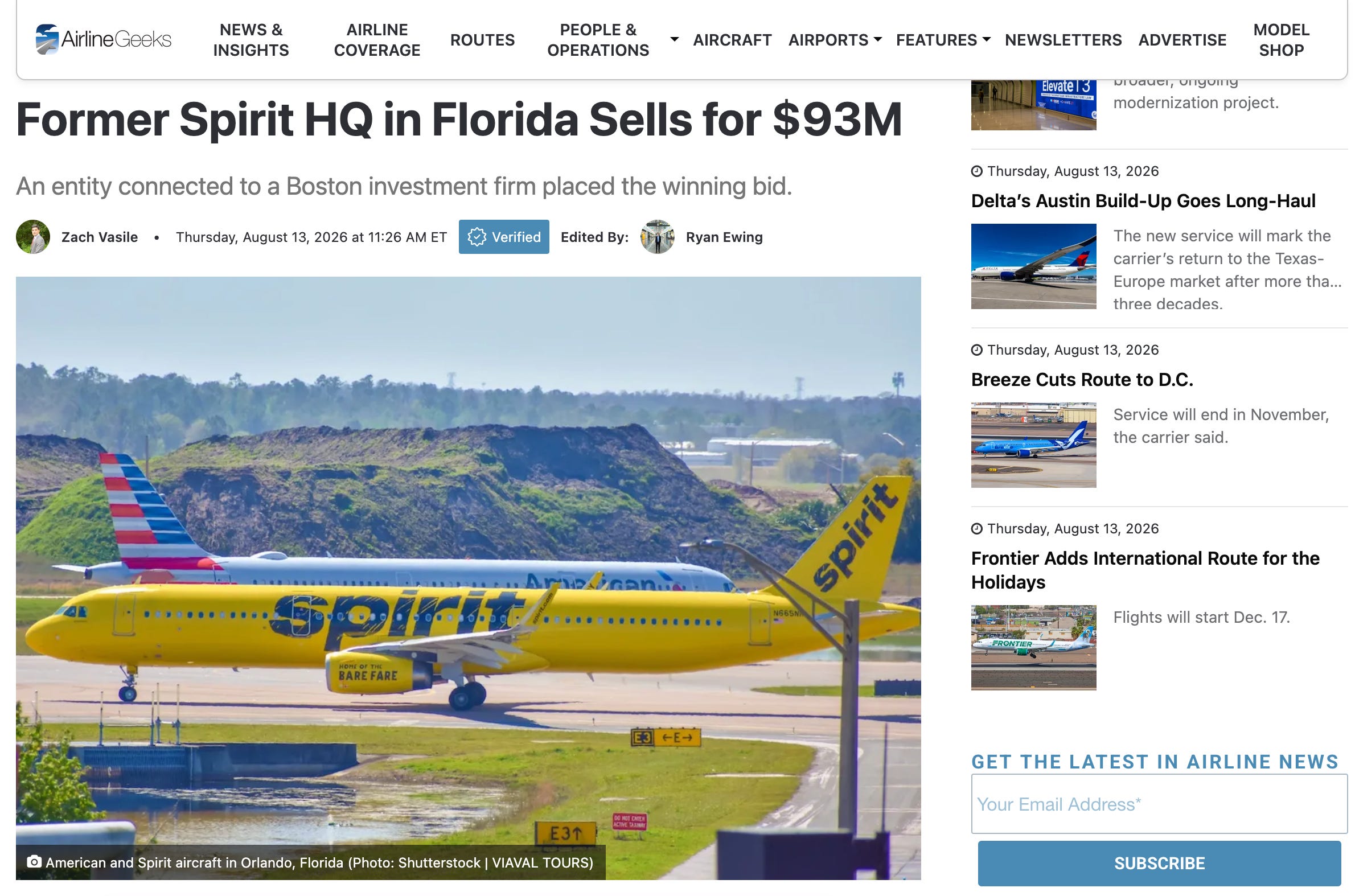
The corporate headquarters auction happened August 11, right at the campus. DPC HoldCo LLC won with a $93.25 million final bid — up from its original $88 million stalking horse offer. A competing bidder, REM Acquisition LLC, actually bid higher — $97 million — and lost anyway. Why: as the stalking horse, DPC HoldCo is owed a breakup fee and expense reimbursement if it loses, and once that’s factored in, REM’s “higher” bid would have actually netted the estate less cash. The objection deadline for this sale passed today, August 14. The sale hearing is August 19.
A separate, smaller sale track is also moving: Spirit’s “deidentified” operational data, three flight simulators, and its domain names (Spirit.com and related). The data auction happened August 12, with a Consumer Privacy Ombudsman weighing in the same day — standard practice whenever a bankrupt company sells data with any customer lineage, even scrubbed of identifying info. The simulator and domain sales have been pushed to dates still to be determined.
Flippin Update: Blocked on One Front, Let In on Another
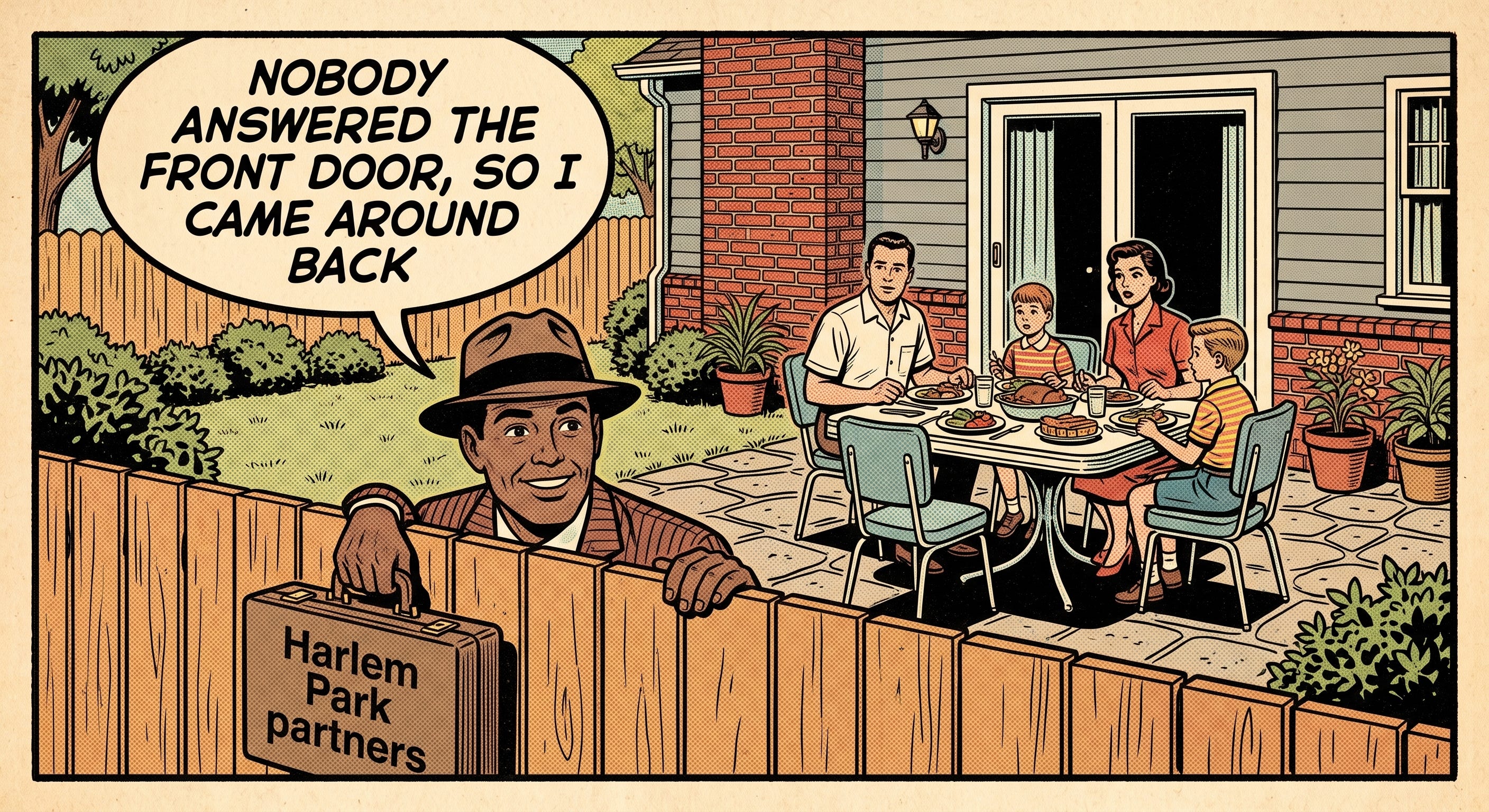
Quick follow-up to the Ameer Flippin/Harlem Park Partners story from last issue. Separately from his blocked attempt to directly contact the campus stalking horse bidder, Flippin has now been granted Data Room access for the 27-aircraft auction and formally notified the court of his intent to bid as an “Interested Potential Bidder.” So the accurate picture isn’t “he got shut out” — it’s that Davis Polk enforced the no-direct-contact rule on the campus joint-bid attempt, while he separately gained legitimate access through the proper channel on the aircraft track.
The Honeywell Fight Turns Into a Four-Front War
Quick context: Honeywell Aerospace wants back roughly $24 million in spare parts and auxiliary power units (APUs) it says it never actually sold to Spirit, just consigned. As of August 13, it’s now being opposed by four separate parties in coordinated filings: the Debtors themselves, Citibank (as agent for the revolving credit facility lenders), the Ad Hoc Committee behind Spirit’s $275 million wind-down DIP facility, and the noteholders/buyer behind the aircraft sale. Their shared argument: Honeywell never filed the paperwork (a UCC financing statement) needed to actually perfect its claim, so everyone who did file the paperwork outranks it. Not employee-facing directly, but a real signal of how contested the wind-down has become — and it touches the same aircraft sale timeline the September auction depends on.
So Where Does All This Money Actually Go???
Every time another asset sells, it’s natural to wonder: does that get us closer to being paid? The honest answer is “it depends where you are in line” — and here’s exactly how that line works.
The short version: federal law pays secured lenders from their specific collateral before anyone else touches it — including workers. Only what’s left over after that flows down to wage and benefit claims.
The mechanics: secured creditors — banks and bondholders holding a lien on a specific asset — get paid from that asset’s sale proceeds up to the full value of their collateral, before the general priority system for unsecured claims (11 U.S.C. § 507) even switches on. Once secured creditors are satisfied, the § 507 tiers apply to what’s left — and both flavors of employee claims we just walked through get real priority there, ahead of ordinary vendors. But priority among the leftovers only matters if there are leftovers.
How this is actually running in Spirit’s case: the court’s order approving the LGA slots sale (Docket 1395) spells it out directly — proceeds first reimburse wind-down costs, then the remainder is legally locked up (”segregated”) specifically to pay down the RCF loans. The campus and aircraft sales follow the same shape: EETC debt gets paid first from aircraft proceeds, then the DIP loan balance, then the RCF loans. Employee claims aren’t in that lineup — they’re waiting to see what’s left once it plays out.
Two pots, two separate arguments:
The $70 million segregated employee reserve — (the one AFA is fighting over, tied to Docket 1164) already exists as a fixed amount. It doesn’t grow or shrink based on how the campus or aircraft sales go — that fight is purely about whether it gets released, not about its size.
Everything else — the broader Omnibus Union Claims, and any Form 410 pre-petition wage claims not otherwise covered — depends on whether asset sales generate enough to pay secured lenders in full first. Restructuring advisors have already flagged real uncertainty about whether they will.
The campus selling for more than expected is good news for the estate’s total recovery. It is not, by itself, good news for what employees see — that depends on a payment line where workers stand behind the secured lenders, waiting to find out what’s left when the line ends.
Court Dates to Watch
Bankruptcy hearing and deadline dates in this case have already shifted more than once. Confirm anything time-sensitive directly through Epiq’s case site or PACER before making travel or filing plans around it.
Aug 19, 2026, 11:00 a.m. Campus sale approval hearing; Eastdil Secured retention hearing; Deidentified Data sale approval
Aug 27, 2026, 4:00 p.m. Aircraft (27 EETC-financed A320-family jets) — final bid deadline
Sep 9, 2026, 10:00 a.m. Aircraft auction — virtual, via Zoom
Sep 14, 2026, 4:00 p.m. Aircraft sale — objection deadline
Sep 16, 2026, 11:00 a.m. Aircraft Sale Hearing / monthly Omnibus Hearing
Oct 14, 2026, 11:00 a.m. Omnibus Hearing — ongoing wind-down and administrative claims matters
Questions about which form you filed, or whether you’re covered? Check your claim status directly with Epiq (855-952-6606) — and if you’re not sure, it doesn’t hurt to ask.
— The Unpaid Employee | spiritdidnotpayme.com